Norwegian Forest Cat
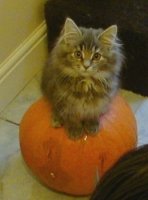
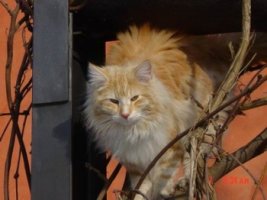
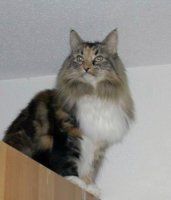
GENERAL: the Norwegian Forest Cat is a sturdy cat with a distinguishing double coat and easily recognizable body shape. It is a slow maturing breed, attaining full growth at approximately five years of age.
SUGGESTED BREEDINGS by MENANDPETS.COM
No breeding to signal
if you want to know like signaling yours, contacts: marketing@inseparabile.it
HEAD: equilateral triangle, where all sides are of equal length as measured from the outside of the base of the ear to the point of the chin. The neck is short and heavily muscled.
NOSE PROFILE: straight from the brow ridge to the tip of the nose without a break in the line. The flat forehead continues into a gentle curved skull and neck.
CHIN: the chin is firm and should be in line with the front of the nose. It is gently rounded in profile.
MUZZLE: part of the straight line extending toward the base of ear without pronounced whisker pads and without pinch.
EARS: medium to large, rounded at the tip, broad at base, set as much on the side of the head as on top of the head, alert, with the cup of the ear pointing a bit sideways. The outsides of the ears follow the lines from the side of the head down to the chin. The ears are heavily furnished. Lynx tips are desirable but not required.
EYES: large, almond shaped, well-opened and expressive, set at a slight angle with the outer corner higher than the inner corner.
BODY: solidly muscled and well-balanced, moderate in length, substantial bone structure, with powerful appearance showing a broad chest and considerable girth without being fat. Flank has great depth. Males should be large and imposing; females may be more refined and may be smaller.
LEGS: medium with hind legs longer than front legs, making the rump higher than the shoulders. Thighs are heavily muscled; lower legs are substantial. When viewed from the rear, back legs are straight. When viewed from the front the paws appear to be "toe out." Large round, firm paws with heavy tufting between toes.
TAIL: long and bushy. Broader at the base. Desirable length is equal to the body from the base of tail to the base of neck. Guard hairs desirable.
COAT: distinguishing double coat, consisting of a dense undercoat, covered by long, glossy and smooth water-resistant guard hairs hanging down the sides. The bib consists of three separate sections: short collar at neck, side mutton chops, and frontal ruff. Britches are full on the hind legs. The coat may be fuller in the winter than the summer because the dense undercoat has its full development in the winter. Softer coats are permitted in shaded, solid and bicolor cats. Type and quality of coat is of primary importance; color and pattern are secondary.
PATTERNS: every color and pattern is allowable with the exception of those showing hybridization resulting in the colors chocolate, sable, lavender, lilac, cinnamon, fawn, point-restricted (Himalayan type markings), or these colors with white.
COLORS AND PATTERN: the color and pattern should be clear and distinct. In the case of the classic, mackerel and spotted tabbies the pattern should be well-marked and even.
DISQUALIFY: severe break in nose, square muzzle, whisker pinch, long rectangular body, cobby body, incorrect number of toes, crossed eyes, kinked or abnormal tail, delicate bone structure, malocclusion resulting in either undershot or overshot chin, cats showing evidence of hybridization resulting in the colors chocolate, sable, lavender, lilac, cinnamon, fawn, or point-restricted (Himalayan-type markings) or these colors with white.
NORWEGIAN FOREST CAT COLORS
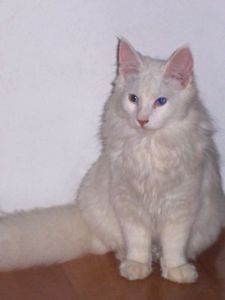
EYE COLOR: eye color should be shades of green, gold, green-gold or copper. White cats and cats with white may have blue or odd eyes.NOSE LEATHER AND PAW PADS: any color or combination of colors, not necessarily related to coat color except where so noted. Cats with white on feet may have pink paw pads or they may be bi- or multi-colored.
BUTTONS AND LOCKETS: allowable on any color and/or pattern. Cats with buttons and/or lockets shall be judged as their basic color with no penalty for such locket and/or button.
WHITE: pure glistening white. Nose leather and paw pads: pink desirable.
BLACK: dense coal black, sound from roots to tip of fur. Nose leather: black desirable. Paw pads: black desirable.
BLUE: one level tone from nose to tip of tail, sound to the roots. Nose leather and paw pads: blue desirable.
RED: deep, rich, clear, brilliant red; without shading, markings, or ticking. Nose leather and paw pads: brick red desirable.
CREAM: one level shade of buff cream, without markings. Sound to the roots. Lighter shades preferred. Nose leather and paw pads: pink desirable.
CHINCHILLA SILVER: undercoat pure white. Coat on back, flanks, head, and tail sufficiently tipped with black to give the characteristic sparkling silver appearance. Legs may be slightly shaded with tipping. Chin, ear tufts, stomach, and chest, pure white. Rims of eyes, lips, and nose outlined with black. Nose leather: brick red desirable. Paw pads: black desirable.
SHADED SILVER: undercoat white with a mantle of black tipping shading down from sides, face, and tail from dark on the ridge to white on the chin, chest, stomach and under the tail. Legs to be the same tone as the face. The general effect to be much darker than a chinchilla. Rims of eyes, lips, and nose outlined with black. Nose leather: brick red desirable. Paw pads: black desirable.
CHINCHILLA GOLDEN: undercoat rich warm cream. Coat on back, flanks, head, and tail sufficiently tipped with black to give golden appearance. Legs may be slightly shaded with tipping. Chin, ear tufts, stomach, and chest, cream. Rims of eyes, lips, and nose outlined with black. Nose leather: deep rose desirable. Paw pads: black desirable.
SHADED GOLDEN: undercoat rich warm cream with a mantle of black tipping shading down from the sides, face, and tail from dark on the ridge to cream on the chin, chest, stomach, and under the tail. Legs to be the same tone as the face. The general effect to be much darker than a chinchilla. Rims of eyes, lips, and nose outlined with black. Nose leather: deep rose desirable. Paw pads: black desirable.
SHELL CAMEO (Red Chinchilla): undercoat white, the coat on the back, flanks, head, and tail to be sufficiently tipped with red to give the characteristic sparkling appearance. Face and legs may be very slightly shaded with tipping. Chin, ear tufts, stomach, and chest, white. Nose leather and paw pads: rose desirable.
SHADED CAMEO (Red Shaded): undercoat white with a mantle of red tipping shading down the sides, face, and tail from dark on the ridge to white on the chin, chest, stomach, and under the tail. Legs to be the same tone as face. The general effect to be much redder than the shell cameo. Nose leather and paw pads: rose desirable.
SHELL TORTOISESHELL: undercoat white. Coat on the back, flanks, head, and tail to be delicately tipped in black with well-defined patches of red and cream tipped hairs as in the pattern of the tortoiseshell. Face and legs may be slightly shaded with tipping. Chin, ear tufts, stomach, and chest, white to very slightly tipped. Blaze of red or cream tipping on face is desirable.
SHADED TORTOISESHELL: undercoat white. Mantle of black tipping and clearly defined patches of red and cream tipped hairs as in the pattern of the tortoiseshell. Shading down the sides, face, and tail from dark on the ridge to slightly tipped or white on the chin, chest, stomach, legs, and under the tail. The general effect is to be much darker than the shell tortoiseshell. Blaze of red or cream tipping on the face is desirable.
BLACK SMOKE: white undercoat, deeply tipped with black. Cat in repose appears black. In motion the white undercoat is clearly apparent. Points and mask (i.e., face, ears, paws and tip of tail) black with narrow band of white at base of hairs next to skin which may be seen only when fur is parted. Light silver frill and ear tufts. Nose leather and paw pads: black desirable.
BLUE SMOKE: white undercoat, deeply tipped with blue. Cat in repose appears blue. In motion the white undercoat is clearly apparent. Points and mask (i.e., face, ears, paws and tip of tail) blue with narrow band of white at base of hairs next to skin which may be seen only when fur is parted. White frill and ear tufts. Nose leather and paw pads: blue desirable.
CREAM SMOKE: white undercoat, deeply tipped with cream. Cat in repose appears cream. In motion the white undercoat is clearly apparent. Points and mask (i.e., face, ears, paws and tip of tail) cream with narrow band of white at base of hairs next to skin which may be seen only when fur is parted. White frill and ear tufts. Nose leather and paw pads: pink desirable.
CAMEO SMOKE (Red Smoke): white undercoat, deeply tipped with red. Cat in repose appears red. In motion the white undercoat is clearly apparent. Points and mask (i.e., face, ears, paws and tip of tail) red, with narrow band of white at base of hairs next to skin which may be seen only when fur is parted. White frill and ear tufts. Nose leather, rims of eyes and paw pads: rose desirable.
SMOKE TORTOISESHELL: white undercoat, deeply tipped with black with clearly defined unbrindled patches of red and cream tipped hairs as in the pattern of the tortoiseshell. Cat in repose appears tortoiseshell. In motion the white undercoat is clearly apparent. Points and mask (i.e., face, ears, paws, tip of tail) tortoiseshell pattern with narrow band of white at the base of the hairs next to the skin that may be seen only when fur is parted.White ruff and ear tufts. Blaze of red or cream tipping on face is desirable.
BLUE-CREAM SMOKE: white undercoat deeply tipped with blue, with clearly defined patches of cream as in the pattern of the blue-cream. Cat in repose appears blue-cream. In motion the white undercoat is clearly apparent. Points and mask (i.e., face, ears, paw, tip of tail) blue-cream pattern with narrow band of white at the base of the hair next to the skin that may be seen only when fur is parted. White ruff and ear tufts. Blaze of cream tipping on face is desirable.
CLASSIC TABBY PATTERN: markings dense, clearly defined, and broad. Legs evenly barred with bracelets coming up to meet the body markings. Tail evenly ringed. Several necklaces on neck and upper chest, with locket allowed. Frown marks on forehead form an intricate letter "M." Unbroken line runs back from outer corner of eye. Swirls on cheeks. Vertical lines over back of head extend to shoulder markings which are in the shape of a butterfly with both upper and lower wings distinctly outlined and marked with dots inside outline. Back markings consist of a vertical line down the spine from butterfly to tail with a vertical stripe paralleling it on each side, the three stripes separated by stripes of the ground color. Large solid blotch on each side to be encircled by one or more unbroken rings. Side markings should be the same on both sides. Double vertical rows of buttons on chest and stomach. White buttons and/or lockets allowed.
MACKEREL TABBY PATTERN: markings dense, clearly defined, and all narrow pencillings. Legs evenly barred with narrow bracelets coming up to meet the body markings. Tail barred. Necklaces on neck and chest distinct; white locket allowed. Head barred with an "M" on the forehead. Unbroken lines running back from the eyes. Lines running down the head to meet the shoulders. Spine lines run together to form a narrow saddle. Narrow pencillings run around body. White buttons and/or lockets allowed.
PATCHED TABBY PATTERN: a patched tabby (torbie) is an established silver, brown, blue or blue-silver tabby with patches of red and/or cream. White buttons and/or lockets allowed.
SPOTTED TABBY PATTERN: markings on the body to be spotted. May vary in size and shape with preference given to round, evenly distributed spots. Spots should not run together in a broken mackerel pattern. A dorsal stripe runs the length of the body to the tip of the tail. The stripe is ideally composed of spots. The markings on the face and forehead shall be typically tabby markings. Underside of the body to have "vest buttons." Legs and tail are barred. White buttons and/or lockets allowed.
TICKED TABBY PATTERN: body hairs to be ticked with various shades of marking color and ground color. Body when viewed from top to be free from noticeable spots, stripes or blotches, except for darker dorsal shading. Lighter underside may show tabby markings. Face, legs and tail must show distinct tabby striping. White buttons and/or lockets allowed.
BROWN PATCHED TABBY: ground color brilliant coppery brown with classic or mackerel tabby markings of dense black with patches of red and/or cream clearly defined on both body and extremities; a blaze of red and/or cream on the face is desirable. Lips and chin the same shade as the rings around the eyes.
BLUE PATCHED TABBY: ground color, including lips and chin, pale bluish ivory with classic or mackerel tabby markings of very deep blue affording a good contrast with ground color. Patches of cream clearly defined on both body and extremities; a blaze of cream on the face is desirable. Warm fawn overtones or patina over the whole.
SILVER PATCHED TABBY: ground color, including lips and chin, pale silver with classic or mackerel tabby markings of dense black with patches of red and/or cream clearly defined on both body and extremities. A blaze of red and/or cream on the face is desirable.
SILVER TABBY (classic, mackerel, spotted, ticked): ground color, including lips and chin, pale, clear silver. Markings dense black. Nose leather: brick red desirable. Paw pads: black desirable.
BLUE-SILVER TABBY (classic, mackerel, spotted, ticked): ground color pale, clear silver. Markings a deep blue affording a good contrast with ground color. White trim around chin and lip allowed. Nose leather: old rose desirable. Paw pads: rose desirable.
BLUE-SILVER PATCHED TABBY: ground color pale, clear silver with classic or mackerel tabby markings of a deep blue affording a good contrast with the ground color. Patches of cream clearly defined on both body and extremities; a blaze of cream on the face is desirable. White trim around chin and lip allowed.
RED TABBY (classic, mackerel, spotted, ticked): ground color red. Markings deep, rich red. Lips and chin red. Nose leather and paw pads: brick red desirable.
BROWN TABBY (classic, mackerel, spotted, ticked): ground color brilliant coppery brown. Markings dense black. Back of leg black from paw to heel. Nose leather and paw pads: black or brown desirable.
BLUE TABBY (classic, mackerel, spotted, ticked): ground color, including lips and chin, pale bluish ivory. Markings a very deep blue affording a good contrast with ground color. Warm fawn overtones or patina over the whole. Nose leather and paw pads: rose desirable.
CREAM TABBY (classic, mackerel, spotted, ticked): ground color, including lips and chin, very pale cream. Markings of buff or cream sufficiently darker than the ground color to afford good contrast, but remaining within the dilute color range. Nose leather and paw pads: pink desirable.
CREAM SILVER TABBY (classic, mackerel, spotted, ticked): Markings cream. Undercoat white. Nose letter and paw pads: pink desirable.
CAMEO TABBY (classic, mackerel, spotted, ticked): markings red. Undercoat white. Nose leather and paw pads: rose desirable.
TORTOISESHELL: black with patches of red or softly intermingled area of red on both body and extremities. Presence of several shades of red acceptable.
CALICO: white with unbrindled patches of black and red. As a preferred minimum, the cat should have white feet, legs, undersides, chest, and muzzle. Inverted "V" blaze on face desirable.
DILUTE CALICO: white with unbrindled patches of blue and cream. As a preferred minimum, the cat should have white feet, legs, undersides, chest, and muzzle. Inverted "V" blaze on face desirable.
BLUE-CREAM: blue with patches of solid cream. Patches clearly defined and well broken on both body and extremities.
BI-COLOR: black and white, blue and white, red and white, or cream and white.
VAN BI-COLOR: black and white, blue and white, red and white, or cream and white. White cat with color confined to the extremities; head, tail, and legs. One or two small colored patches on body allowable.
VAN CALICO: white cat with unbrindled patches of black and red confined to the extremities; head, tail, and legs. One or two small colored patches on body allowable.
VAN DILUTE CALICO: white cat with unbrindled patches of blue and cream confined to the extremities; head, tail, and legs. One or two small colored patches on body allowable.
(NOTE: cats having more than two small body spots should be shown in the regular bi-color class.)
TABBY AND WHITE: white with colored portions, the colored portions of the cat to conform to the currently established tabby color standards.
SMOKE/SHADED/SHELL AND WHITE: white with colored portions, the colored portions of the cat to conform to the color standard.
TORTOISESHELL AND WHITE: white with colored portions, the colored portions of the cat to conform to the tortoiseshell standard.
BLUE-CREAM AND WHITE: white with colored portions, the colored portions of the cat to conform to the blue-cream standard.
ANY OTHER NFC COLORS: any other color or pattern with the exception of those showing hybridization resulting in the colors chocolate, lavender/lilac, the himalayan pattern, or these combinations with white.
above the CFA Breed Standards
after automatic translate from inseparabile.com
THE HISTORY
The old relative popular legends to the cats of the forests come from sources that they support that the cats of house of the Vichinghi Norwegian were cats of the forests. The Vichinghi took with they the own cats in their wanderings in the world then known and beyond, and it believes that this is the explanation of the great number of cats semiselvati to semilong hair even finds to us to you in Normandia and in the USA.
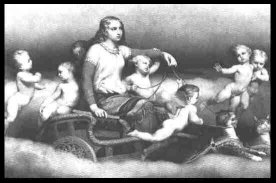
Gi in the Edda, a handbook species to use of the poets written gives Snorri Sturluson around to 1220, and in which the arguments of which are collected all Bravo poet would have to speak, they are cited of the cats, associating them to two most famous divinit Nordic ones: Freya, the goddess of the love, than vague for the world trying its lost consorte Odur to edge of a wagon hauled from two cats from along hair; and Thor, the God of the thunder, than during its wanderings had to exceed a test of force consisting in raising a large cat.
In the 1559 Danish clergyman Peter Clausson Friis , than to that time it lived in Norway and it was a lot interested to the nature, uniforms the Norwegian lynxes in three classes: the lynx-lupo, the lynx-vixen and the lynx-cat. Devout late it was clearly that all the Norwegian lynxes belonged to the same class. What Peter Clausson Friis called lynx-cat was perhaps the true Cat of the Norwegian Forests. decidedly possible, since also to the day today many similitudini between the lynx and the Cat of the Norwegian Forests are found. Devout the immediate ones are that both are cats of great ransom, equip you of high legs, long criniera and forelocks of hair on the orecchie. Beyond to this, both love the water and are many the history that speak about cats of the able forests to take fish in lagos and the streams, exactly like the lynxes.
They have been these similitudini between the lynx and the cat of the forests that have pushed devout and devout times people to having a not superficial interest for these cats.
In the villages there were many cats, naturally, but in the ancient legends there a particular type that it often comes cited a lot, and a great cat to long hair. For its ransoms and the characteristics similar to those of the lynx, the popolani thought that it was a hybrid between dog and cat, or, devout commonly, that average lynx was one.
In the legends collections they give Asbjornsen and Moe the cats of the forests appear various times. They come calls "Huldrekat to you", word that defines "a cat of the forests endowed of a driven in hairy tail" and that it derives from the name of the feminine spirits of the forests, Huldren, exactly. The Norwegian writer Gabriel Scott in 1912 a famous book for children wrote entitled " Slvfaks ", whose main personage was a cat of the forests from the same name.
The biological explanation of the apparition of the cats of the forests that their ancestors were a lot probably cats to short hair of the south Europe that was diffused in Norway cos like in the rest of the continent in preistorica age. Through the natural selection that has worked holding account of the different and difficult climatic conditions of Norway, they are survivors only the individuals with driven in hair and other adaptations to this rigid atmosphere.
In years thirty, the Norwegians interested to the cats began to observe the cats of the forests. Of other part, until the beginning of years seventy, when not that the cats of the forests, like effect of the ruralizzazione of the wild atmosphere and consequent the greater ones chances of survival of the domestic cats to short hair, were start to you towards the extinction, a serious program of breeding was not started. As it is known, the connections between cats to short hair and cats to long hair carry to prole to short hair, cosicch, in absence of factors like the scarsit of cold places that favor the long hair, the cats to long hair are assign to you to disappear in short times.
In December 1975 , enthusiastic breeders founded Norsk Skogkattring (Club of the Cats of the Norwegian Forests), and gi in 1976 the race officially was accepted from the FIF , devout the great organization interested to the cats in Europe.
Hour in front of very many job was found to us in order to find the animals adapted the breeding, making sure itself that the pool genetic it was enough wide in order to hold the far race from the risks of the connections between consanguinei. This job continued in Scandinavia until 1990, when decided to stop to recognize new coming from animals from the campaigns, the so-called the novices.
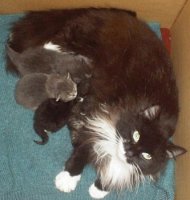
Between the pioneers the two devout ones remember to you are Else Nylund, name of breeding " Pan ", and Randi and Arild Grotterd that have given great contribution to the race with their breeding" Torvmyra ". The reason for which these two breedings are particularly remembers to you that vegono still it raises cats to you under these names, and to tutt' today practically impossible to find a cat in whose pedigree not ancestors are from some long part the relationship lines who come from "Pan" or "Torvmyra".
Other breeders, than for a reason or the other have stopped to raise Norwegians, but whose infuence pu clearly to be noticed in the race cos like appears to us today, have raised with the names "Colosseum", "av Baune" and "Pjewiks Forest".
The Norwegian pioneers were soon place side by side to you from Danish breeders, like Vibeke Poulsen, ("Dovregubben") and Dortemarie Kaplers ("Guldfakse"). In this moment nobody of these two breedings is producing Norwegian. Vibeke Poulsen was the owner of the first Norwegian arrived in Denmark, whose name Norwegian Wood' s April Dream, call with the nickname of "Sidser". Sidser was recognized like Cat of the Norwegian Forests in one exposure in Denmark, and mor to ET of 16 years.
The acknowledgment of Sidser gave beginning to all. Several cats were import to you in a short one lasso of time. The devout ones known still today are three males, rather anzianotti. Devout the old one, been born in 1980, was IC Rde Peer After he arriv GIC & EP Torvmyra' s Grand Soltario The devout ones loved of the three were EC Colosseum' s Gustav Graah , Distinguished, been born Merit in May 1981. These three stalloni are not obviously devout assets from much time, and only Torvmyra' s Grand still alive Soltario, but all they have largely contributed to the development of the race in Denmark and to its spread in Europe.
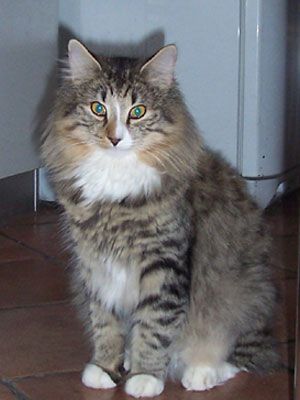
in the Hermes photo of Jack The Bastard
| Ransom |
Large |
| Head | Triangular shape, where all the sides have equal length, of good height when seen of profile, forehead leggermente rounded off, profile straight without some interruption (nobody stop) |
| Mento | Strongly |
| Orecchie | Large, with good width to the base, appuntite, with ciuffetti similar to those of the lynx and long hairs that fuoriescono. Placed high and opened, so that the outside line of the ear follows the line of the head gi until the mento |
| Eyes | Great and of shape oval, very open and placed leggermente oblique. Careful expression. All the colors are allowed independently from the color of the cape |
| Structure of the body | Long body, of sturdy construction and with solid bony structure |
| Legs | Sturdy, high, with long devout posterior legs of the front ones. Large feet, round off to you and proporziona you to legs |
| Tail | Long and supplied of hair, it would have to catch up for less the bachelor, but preferibilmente to arrive to the neck |
| Structure of the cape | Semilong hair. The sottopelo lanoso covered from a cover hair I polish and idrorepellente that formed from long, large hairs and polishes that they cover the back and the flanks. A cat in full hair has one gorgiera, one criniera completes and pantaloncini on posterior legs |
|
Color |
All the colors are permissions, included all the variet with white man, are excluded the designs of type point (siamese) and the chocolate colors, lilac, cinnamon and fawn. Any quantit of allowed white man, as an example: one giacchetta white woman, spots white women on the back, the thoracic case or the belly, feet white men |
| Defects | It generates them | Small cat tropo or of thin structure |
| Head | Round or square, profile with interruption (stop) | |
| Orecchie | Small, placed too much low, placed too much near between they | |
| Legs | Court, thin | |
| Tail | Short | |
| Cape | Dry cape, knotted, too much setoso |
Table of score (FIF)
| Total | 100 | |
| Head | General shape, nose, profile, bite and teeth, mento | 20 |
| Orecchie | Shape, dimensions and placing | 10 |
| Eyes | Shape, expression | 5 |
| Body | Shape, dimensions, bony structure, legs, dimensions of the feet | 25 |
| Tail | Length and shape | 10 |
| Cape | Qualit and webbing | 25 |
| Condition | 5 | |
| Notes | The cape only estimated for webbing and qualit In the judgment account of the maturation much slow one of this race would have to be held Devout the mature males must have the wide head of that one of the females The length of the hair and the densit of the fur vary with the season The puppys can demand devout of six months in order to develop the cover hair |
|
THE HABITS
a cat that loves the comodit but knows magnificently cavarsela also in the difficult situations. It adores to hunt, to scramble up on the trees, to run, to jump. Predilige therefore a opened all.aria life, but does not scorn that from homely if accustomed to you sin from tender ET, on condition it has space to sufficienza in order to train its athletic physicist. It is become attached easy to the human companion with 11 which it establishes a deep and sincere relationship. Also the Norwegian loves to take a walk imbragato to a leash.
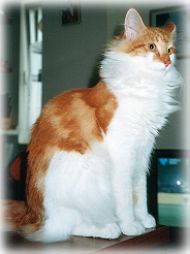 The COLORS Of the NORWEGIANS
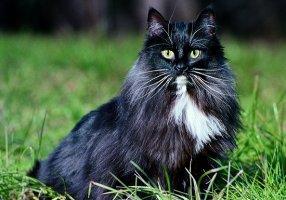
Like mentioned in the standard, the Cat of the Norwegian Forests recognized in all the colors, with and without white man.
This includes all the designs tabby with and without white man.
Of other part, many of the terms commonly used in order to indicate the colors have mean to you different in the daily language.
Here therefore a short dictionary.
| TABBY | the genetic term in order us that we call a tigrato cat. The Cat of the Norwegian Forests pu to be found in four different variet of design tabby: | ||
| TABBY SPOTTED | a cat whose design forms of the bullets (spot in English) | ||
| TABBY MACKEREL | A cat "to lines", the popular name "tigrato" | ||
| TABBY BLOTCHED | Called also Classic Tabby, it has the aspect of a marmoreo design | ||
| TABBY TICKED | The cat has the tigrati head and legs, the uniform colorful body, so as to to be similar a wild rabbit | ||
Some of the colors in which the possible one to find the Cat of the Forests have names many poetici. Who pu to imagine what can mean a called color "tortie smoke"? Exciting sound, but what is similar?
| TORTIE | Term common in order to define "tricolour" the so-called females. If they introduce a mixture of black and red tortie ", if of red Brown tabby mackerel and the Browns are calls" mackerel torbie ", etc are calls" black. The cats tortie/torbie are always females. |
| RED | A cat whose color goes from the ginger to the carrot. All the red cats have a design tabby, and the great part of they is males. |
| CREAM | A cat that to the human eye appears of less intense color devout rose or, the cream genetically one dilution of the red one. |
| SMOKE | All the colors in which the base of the hair clear, nearly white woman, and the color increases until its flood densit going towards the tips, in the cats smoke not present the design tabby. |
| SILVER | A cat silver a cat smoke in the which present design tabby. All the colors can be in varying silver. A "devout blue silver tabby" clearly of the blue correspondent "tabby", "black silver tabby" devout clearly of the correspondent "black tabby" (or Brown tabby that to say it wants), etc. |
| BLUE | An entire blue cat has one tonalit grey uniform. Pu to vary in intensit from a gray dog of gun to color a pearl. The blue cats can also have a design tabby. Genetically the blue one dilution of the black one |
| DILUTION | With the term dilution the difference of densit agrees of the pigment that they give the every color to single hair of the cat, a black cat has black pigment grains densit in its hairs, a blue cat has densit a much minor, cosicch to the human eye appears gray |
| RUFISMO | the term that defines those geniuses that render the tone of the warm color devout. As an example, Brown tabby pu to seem grayish, or pu to have a color nearly apricot, or an intense brown, with black lines. The devout color of caused intense bottom from the geniuses of the rufismo. |
| GOLDEN | Popular term for the cats from the warm devout colors with very many geniuses of the rufismo. |
| WHITE | Term for a cat completely (genetically) white man. The cats white men can have to the birth a dark spot, call "thumbmark", than of norm to scompare before the life year. |
| ODD-EYES | A cat with a blue eye and an other of color different, green or as an example yellow. This characteristic of typical norm of the cats white men or in cats with very many white man and least color. |
| NON-AGOUTI | A cat that to the human eye appears of uniform color |
| AGOUTI | A term that defines the fact that the greater part of the single hairs of a cat clearly uniform in bands of two different colors, devout and devout alternatively clearly dark. |
In order to deepen the argument we advise you to consult the section dedicated to " GENETICS ".
Code EMS (FIF)
Acronym EMS is for ' Easy Mind System'. E' a code formed from numbers and letters thought in order "to identify" in simple and logical way the salienti characteristics of a cat, but not based on the genetic code of the subject. It describes the race to which it belongs the cat, the color, the design of the cape and the color of the eyes.
A code EMS formed from 3 CAPITAL letters, continuations from or devout VERY SMALL letters that define the color, continuations then from an appropriated numerical code that it defines the design of the cape.
What it follows an extract of Sistema EMS that regards in specific the Cat of the Norwegian Forests.
| Race: Category II | NFO - Norwegian Forest Cat |
| Colors: | n - Black to - Blue d - Red and - Cream f - Tortie |
| Design of the Cape: | 09 - quantit not specified of White man 21 - Tabby design (tigrato) not specified 22 - Blotched Tabby 23 - Mackerel Tabby 24 - Spotted Tabby 25 - Ticked Tabby |
| Color of the eyes: | 61 - Blue eyes 62 - Orange eyes 63 - eyes of various color 64 - eyes Greens |
The numbers of the code are written in ascending order, to es. 09 23. We make some example:
| Tortie Norwegian tiger with white man | NFO f 09 23 |
| C$r-bianco.e.nero Norwegian | NFO n 09 |
| Norwegian Brown tabby with white man | NFO n 09 22 |
| Norwegian Cream tiger | NFO and 23 |
| Black Norwegian silver tabby with white man | NFO ns 09 21 |
INSEPARABLE RINGRAZIA FOR THE REALIZATION OF THIS CARD:
http://www.gattinorvegesi.it
in this splendid portale
You will find history, curiosit, information, images and all how much regards the world of the Norwegian
| You want to help us: you insert one of ours banner on your pages |
copyright
menandpets 18/12/2000 - 2010 |
QUICK LINK
© menandpets All rights reserved.
|