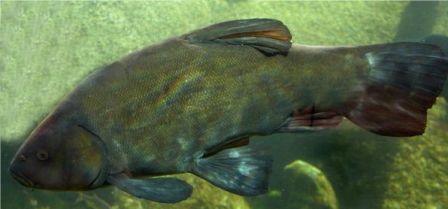
TINCA (Tinca tinca)
Geographic
distribution Europe and Asia
Tinca a ciprinide much common in our sweet waters, especially in those to calm course or tinning and melmoso bottom. During the winter season it remains hidden in the mud in deep zones.
easy recognizable for squame with color the green-olive and glares violetti; its skin covered from a mucus layer that renders it slippery. The tinca it has large fins, especially the ridge, and peduncolo tail large. The body compressed and of structure massiccia and there are two barbels on the labbro advanced.
The tinca it stretches to escape to the beams of the sun and during the day one hides in the folto of the vegetation. It is reproduced in spring and to the beginning of the summer carrying itself in devout less deep waters and moderated of those usually attended.
The females place a highest egg number (devout of one hundred thousand) of small dimensions, in two or three it is made; these come endured fertilized from the male and left between the folto of the aquatic vegetation.
After little days sgusciano the small that grow quickly catching up in a year the weight of approximately 100-150 grammi.La tinca nutre of a varied feeding, comprising animals of various type that scova between the plants or quite in the mud, beyond to aquatic plants.
It succeeds in living in waters tinning or limacciose much poor
of oxygen, for which the its meats they have often sapore of
fango.La tinca it comes also to the rise with systems similar to
those of the carpa and exists one beautiful variet of tinca gilded.
Peach with nets to train or nasse but also with I love it, which
worms, lombrichi or others hang animaletti.
SUGGESTED PET SHOP by MENANDPETS.COM
No Situated Store or to
signal
if you want to know like signaling yours, contacts: marketing@inseparabile.it